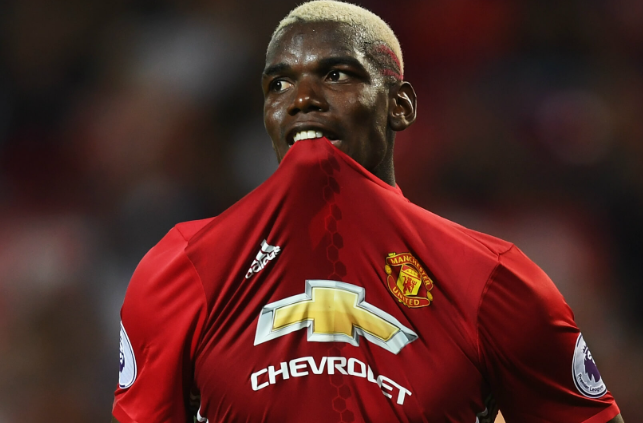
Former France defender Patrice Evra has commented on midfielder Paul Pogba’s transfer to Manchester United in 2016. Evra shared his thoughts on the complexities surrounding Pogba’s return to the club.
He suggested that Manchester United’s decision to bring Pogba back was influenced by more than just footballing reasons. “It seemed like Manchester United wanted to prove a point, possibly to humiliate Sir Alex Ferguson for letting him go in the first place,” he remarked. Evra noted that Pogba’s re-signing came with immense pressure and expectations, which can be difficult for any player.
Pogba’s time at Manchester United was characterized by moments of brilliance mixed with challenges. While he showcased his talent, he also faced criticism for inconsistency. Evra’s comments highlight the intricate dynamics at play in high-profile transfers and the impact of club politics on players’ careers.
“Manchester United brought Pogba back because they wanted to humiliate Alex Ferguson. I advised Pogba not to return, as he had his sights set on Real Madrid, and they were interested in him, but Florentino Perez wasn’t willing to pay the asking price.
“His agent reached out to Manchester United, and they signed him without informing me. The club was pleased because they knew they could sell shirts; after all, kids love Pogba. It was all about commercialism,” Evra stated, as quoted by Goal, referencing the Stick to Football podcast.
To recall, Pogba left Manchester United in 2012 under Sir Alex Ferguson due to limited playing time and subsequently signed with Juventus. Pogba’s departure from Manchester United marked a significant moment in his career, as he sought more opportunities to play regularly. His time at Juventus proved to be highly successful, where he developed into one of the top midfielders in Europe, showcasing his skills and earning accolades. His performances in Serie A and the UEFA Champions League established him as a vital player and helped him regain his confidence.
When Pogba returned to Manchester United in 2016 for a then-world record transfer fee, expectations were sky-high. Fans and analysts anticipated that he would replicate his success at Juventus and become a key figure in the team’s resurgence. However, the return was not as straightforward as many had hoped. Despite flashes of brilliance, Pogba’s time at United was marred by inconsistency, injuries, and various controversies. Evra’s insights shed light on the complexities of Pogba’s return and the club’s motivations. While commercial interests certainly played a role—given Pogba’s popularity and marketability—there were also significant sporting considerations at stake. Pogba’s skill set and potential could have made a substantial impact on the team’s performance, but the realities of high-pressure football and the scrutiny of the media often overshadowed his contributions.
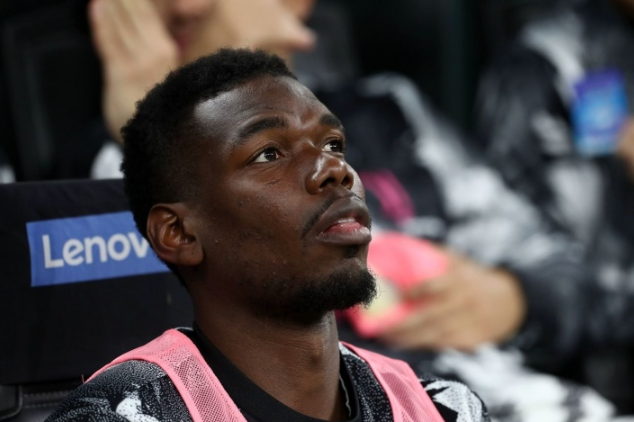
The tension between Pogba and Manchester United became increasingly evident over the years. Fans were divided, with some praising his flair and creativity, while others criticized his perceived lack of effort or commitment. The dynamics of his relationship with management, coaching staff, and teammates became points of speculation. Evra’s comments about the club wanting to “humiliate” Ferguson highlight the underlying complexities within football, where business decisions can sometimes overshadow the sporting element. Ferguson, who is revered for his incredible achievements at United, has always maintained a significant presence in the club’s history. Pogba’s return, in this context, could be seen as a way for the club to make a statement, but it also created a challenging environment for the player himself.
The culmination of these pressures likely influenced Pogba’s decision-making as he navigated his time at United. As the years progressed, it became clear that a change might be necessary for both the player and the club to move forward. Pogba’s desire to leave the club for a second time grew, as he sought to find a setting where he could thrive without the surrounding pressures. As Pogba reflects on his journey, he acknowledges that while the return to Manchester United was filled with promise, it ultimately did not unfold as he had envisioned. His departure from United in search of a new challenge could represent an opportunity for a fresh start—one where he can focus on his game and regain the form that once made him a standout talent.
In conclusion, Evra’s remarks reveal a deeper narrative behind Pogba’s return to Manchester United. The intersection of personal ambition, commercial interests, and sporting expectations created a complex environment for the French midfielder. As Pogba looks to his next steps, the hope is that he can find a club where he can truly flourish and demonstrate his undeniable talent on the global stage once more. The next chapter in his career is anticipated by fans, who are eager to see what the future holds for a player of his caliber.


